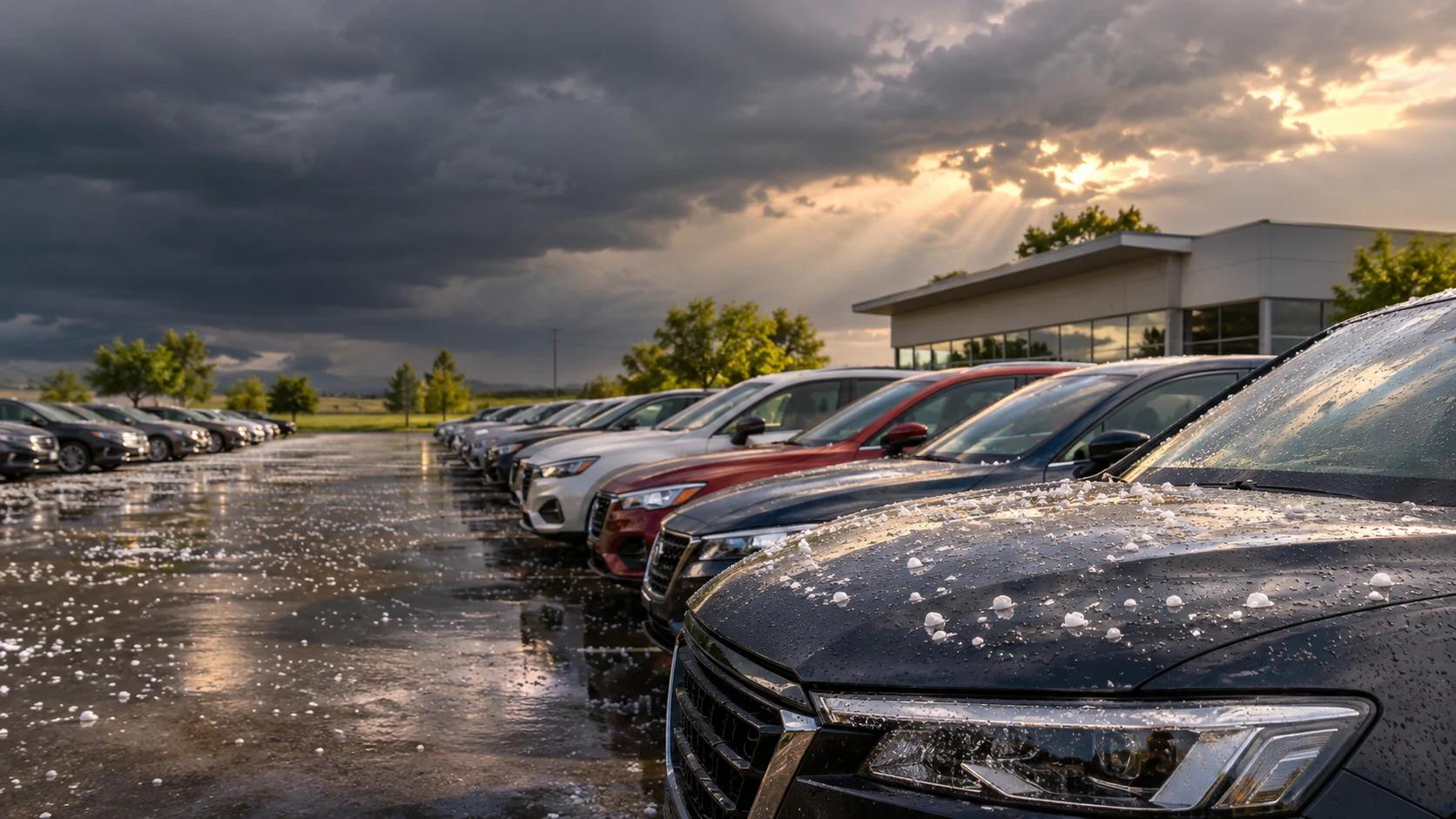
Dealers open lot
Protect the vehicles you hold for sale.
Dealers open lot is physical damage coverage for eligible sale inventory. The important numbers are your peak inventory value, any per-vehicle limit and the deductible that applies when one event damages many cars.
What it protects
Physical damage to sale inventory.
The key distinction
It does not replace driving liability.
Start your review
Use peak values, not only today’s count.
What it can pay for
The purchased causes of loss and inventory definitions determine which vehicles and events qualify.
Weather and theft
Eligible inventory losses from events such as hail, fire or theft, when the selected coverage includes that cause.
Collision and off-site exposure
Collision, transit, auction, demonstration or storage exposures need to fit the coverage and location terms; do not infer them from “open lot.”
What belongs elsewhere
Customer cars awaiting service
Customer vehicles are not sale inventory merely because they share the lot. Review garagekeepers.
Read the explanationInjury to another driver
Physical damage repairs the insured vehicle. Liability for injury or damage caused to others is a separate coverage.
Read the explanationOne storm, many damaged cars
Illustrative example — the policy terms and facts determine the outcome.
- 1
Count the loss
Imagine hail damages 20 eligible inventory cars, with $3,000 of covered repairs per car: $60,000 total.
- 2
Apply the actual deductible
If the policy applies $1,000 per damaged car and no event cap, the deductible total is $20,000. Other policy designs can work differently.
- 3
Then check the remaining terms
A $40,000 amount remains before any other limits, valuation adjustments or exclusions. This illustration is not a quote or promised claim payment.
Read these parts of your policy
| Find this | What to check | Why it matters |
|---|---|---|
| Inventory value basis | How values are calculated and whether reporting is required. | A reporting error or insufficient limit can reduce recovery. |
| Locations and transit | All lots, overflow storage, auctions and transport arrangements. | The risk does not stay at the main street address. |
| Catastrophe deductible | Hail/wind/flood terms, per-vehicle amounts and event minimums or caps. | One storm may trigger many vehicle deductibles. |
| Vehicle eligibility | Consigned, financed, specialty and high-value vehicles. | Ownership and use can change which cars qualify. |
Your practical checklist
Use these boxes as you gather the details. They stay on this page; nothing is submitted.
Common questions
Does the limit need to change when inventory grows?
Compare the new peak value with the policy’s limit and reporting terms. Check the procedure and deadline for increasing coverage before relying on a larger stock level.
Are consigned vehicles included?
Only if the inventory definition or an endorsement includes them. Record who owns the cars and who bears the risk under the consignment agreement.
Does “comprehensive” mean every cause of loss?
No. Read the covered causes, exclusions and special deductibles, particularly for flood, wind and hail.
Coverage depends on the issued policy, endorsements, limits, deductibles and facts of the loss. Examples are illustrative. Submitting an application does not start or change coverage.
Further reading
Sentry: auto dealership coverages ↗Your next step
Put your coverage comparison to work.
Start with your business details and the coverage you want to review. Add current policies and schedules if you have them.